EMILIO BUTRAGUEÑO ¡FÚTBOL!
WHEN ALL OF SPAIN'S IDOL FIT ON A CASSETTE
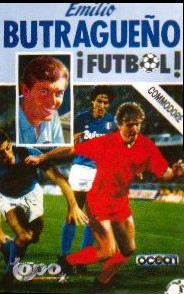
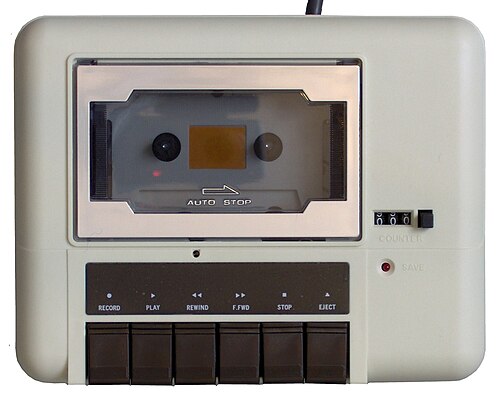
► THE SUMMER OF '86 AND THE KID WHO COULDN'T BELIEVE WHAT HE WAS SEEING
Mexico, 22 June 1986. Spain faced Denmark in the World Cup round of sixteen. Anyone who was between eight and fifteen years old that summer remembers that match. Not as a vague, hazy childhood memory, but with an almost photographic clarity: the heat, the television on at five in the afternoon, the family gathered round, and suddenly a man with hair blowing in the wind putting four Danish defenders in his pocket as if they were training cones.
Four goals. In a single World Cup match. At twenty-two years old. Against Denmark, then one of the best teams in Europe. You had never felt so Spanish in your life.
Emilio Butragueño, El Buitre (The Vulture), was at that moment the most popular footballer in Spain without any possible argument. Real Madrid, the Quinta del Buitre, five consecutive league titles. He was the player you pointed to when someone asked what a modern penalty-box striker looked like: quick, intelligent, with that instinct for appearing in exactly the right place at exactly the right moment. A product of total football dressed in white.
So when in 1987 a box appeared on the shelves of El Corte Inglés — or wherever you bought your games, or at the market stall where the older gentleman sold copied tapes for fifty pesetas — with his face on it and the words "¡Fútbol!" printed above, the reaction was almost inevitable: I want that. Now. Immediately.
A footballer's name on a video game box was a marketing technology as simple as it was devastatingly effective. You didn't need to know if the game was good. You needed to have it. The logic of the eighties kid was irrefutable: if it's got El Buitre on it, it's got to be great.
► TOPO SOFT, THE COMPANY PROVING SPAIN COULD MAKE GAMES TOO
Emilio Butragueño ¡Fútbol! was developed by TOPO Soft, the Spanish video game company that in the second half of the eighties proved that quality software for home computers could come from Spain too. This was no lab curiosity or garage product: TOPO Soft was based in Madrid, had a team, had ambition, and had access to something that British and American studios couldn't easily get their hands on — the image rights of the most famous footballer in Spain.
International distribution was handled by Ocean Software, the British giant that in the eighties held licences for practically everything that moved — films, sportsmen, television series — and knew perfectly well the commercial value of putting a recognisable face on a box. El Buitre's face sold in Spain what a Triple-A cover would sell today: excitement, belonging, and the certainty that you'd be talking about the game with all your friends the next day.
► THE INTRO THAT PUT YOU IN MATCH MODE
Before the match kicked off, the game treated you to a loading screen featuring a digitised portrait of Butragueño that, let's be honest, didn't look entirely like the real Buitre. It looked like someone who could be the Buitre if your thirteen-year-old cousin had drawn him after watching him on television from quite a distance. But that didn't matter. The intention was there, the name was there, and for a ten-year-old kid in 1987, the pixelated representation of your idol on your own computer was almost as exciting as watching him at the Bernabéu.
► SCREENSHOT GALLERY
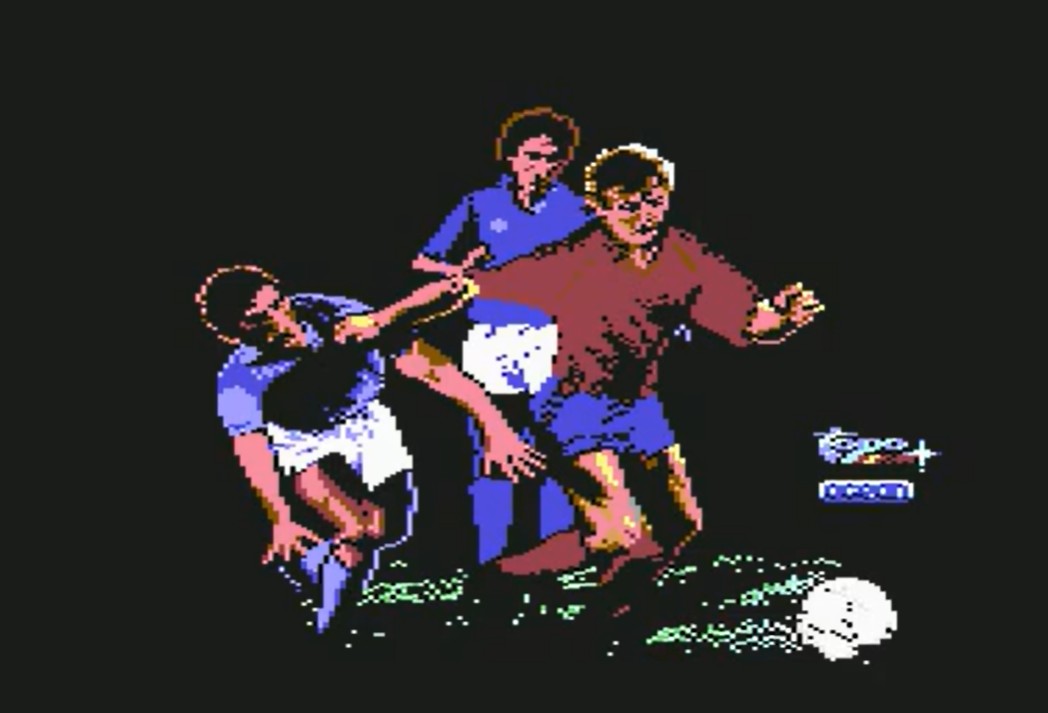
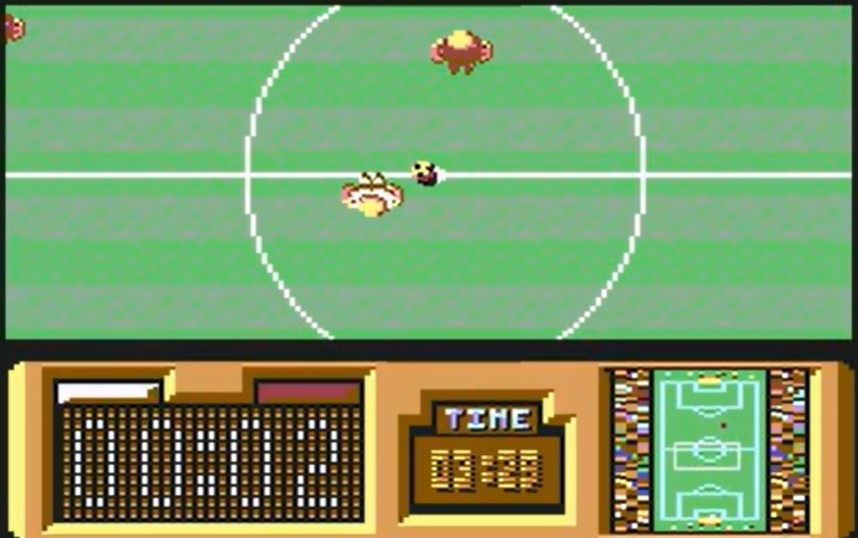
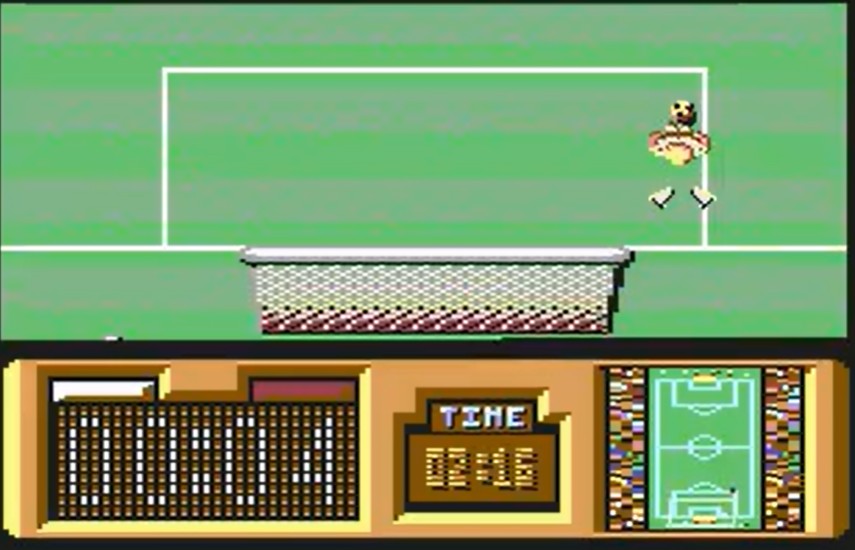
📷 The top-down view gave you perspective. The joystick took the illusion away. But the Ocean logo on the box gave it back.
► TOP-DOWN FOOTBALL: PROMISED MORE THAN IT DELIVERED
Let's talk about the actual game, since that's what we're here for. Emilio Butragueño ¡Fútbol! went with the top-down perspective — that bird's-eye view from above that made the pitch look like a green rectangle with tiny figures moving around it. This was the standard way of representing football on home computers at the time — no processor could handle anything else smoothly — and it did its job of making clear what you were looking at.
The pitch was divided into screens: the camera followed the action, and when the ball went off one side, the image scrolled to show the next section of the playing area. The system wasn't bad for 1987. It was the era's standard. The problem was that the player AI had those moments of inspiration that can only be described as "they've stopped to think about something else". The opposition sometimes charged towards the ball with absolute determination. Other times they stood watching it roll past them as though it were someone else's business entirely.
Was Emilio Butragueño Fútbol better than Fernando Martín Basket Master? This question divided Spanish C64 users with the same intensity that social media debates divide people today. The football camp said football always wins. The basketball camp said Fernando Martín had tighter controls. Both sides were probably right. And both games were probably average at best. But they both had something no British game could give us: they were ours.
► CONTROLLING EL BUITRE: AN ACT OF FAITH
The game's controls were... functional. With caveats. The joystick moved the player nearest the ball, and the fire button shot. So far, so logical. The caveat came when you tried to do anything more sophisticated than simply running towards the ball and kicking it: passes didn't always go where you intended, the shot direction depended on your position relative to the ball in a way that wasn't entirely intuitive, and the goalkeeper had his own views on when to come out and intercept versus when to stand in his goal staring at the horizon.
Frustrating? A little. Did you expect anything different in 1987 from a C64 football game? Honestly, no. The bar in those days was exactly this: the ball moved, the players ran, a goal went in occasionally and you could celebrate it. And that much, the game delivered.
There is a specific moment that everyone who played this game remembers: scoring the first goal and celebrating it alone in front of the TV as if you'd scored at the Bernabéu yourself. The logic was impeccable: you were controlling El Buitre, therefore you were El Buitre, therefore the goal was yours. Self-deception as entertainment technology.
► TWO-PLAYER MODE: THE REAL GOD MODE
Like most sports games of the era, Emilio Butragueño ¡Fútbol! had a two-player mode. And like most sports games of the era, two-player mode transformed it completely. A match against the erratic AI could become monotonous. A match against your brother, your cousin, or the friend from down the street who came round on Saturdays was an entirely different category of experience: tension, strategy, arguments, accusations of cheating that hadn't happened, the inevitable "that goal doesn't count, the goalposts were in the wrong place!".
Computer football has always been, at heart, a social excuse. You don't play football on the C64 to enjoy tactical depth. You play to be right in front of someone else. To prove you're better. To be able to say in the playground that you beat your mate seven-two with Butragueño. The game was the pretext. The victory was the point.
► SOUND: THE SID DOING WHAT IT COULD
The game's soundtrack — which you can hear above if you haven't already — is one of those C64 SID chip compositions that manages to convey energy and rhythm with extremely limited resources. It's not Rob Hubbard on his best day, but it has that martial, animated quality that put you in match mode. The in-game sound was sparser: ball effects, the odd referee whistle, just enough to give the experience a sonic dimension without asking the SID to work miracles beyond its remit.
Put the music on. Seriously. There's something to be said for hearing it now and remembering that in 1987, coming through your living room television while your father read the newspaper and pretended not to watch what you were doing with the computer, it was exactly the soundtrack of a perfect Saturday afternoon.
► A GOOD GAME OR A GAME WITH GOOD COMPANY?
Here comes the moment for honesty, which is what this section is for. Emilio Butragueño ¡Fútbol! was not the best football game available for the C64 in 1987. Microprose Soccer had better gameplay. Sensible Soccer would arrive shortly after and make everyone else look bad. In purely technical and playable terms, if someone asked you which football game to put on the C64 for the best time, the Butragueño wasn't the objective first answer.
But that's judging it by the wrong criteria. The Butragueño wasn't just a football game. It was a Spanish cultural artefact in a market dominated by Anglo-Saxon products. It was TOPO Soft proving that things were being made for kids' computers in Madrid too. It was El Buitre, who had just scored four goals against Denmark, looking out at you from the cover. It was the chance to be, even if only for forty minutes with a joystick in your hand, that fair-haired man who ran faster than anyone in Mexico.
That had a value no technical analysis can correctly measure.
Emilio Butragueño ¡Fútbol! is one of those games you have to judge from the shoes of the kid who played it. Not the shoes of the adult who now knows Sensible Soccer was going to exist. The shoes of the child who in 1987 saw his idol's face on the box and thought there couldn't be anything better in the world. As a game, it was competent without being brilliant: the top-down view worked, the controls were passable, the AI had its days off. As a Spanish eighties experience, it was irreplaceable. TOPO Soft did something Ocean's English team couldn't do alone: give us a game that was ours. El Buitre's. Mexico '86's. That Spain's — the one that for one summer believed it could win anything. The fact that the game was sometimes a bit clumsy only made us try harder. Just like El Buitre himself: not the biggest, but always showing up at exactly the right moment.
THE BEST
+ El Buitre's face on the cover (perfect marketing)+ Spanish production flying the flag on the C64
+ Two-player mode: the most fun chaos of 1987
+ SID soundtrack with energy and personality
+ Clear, functional top-down pitch view
+ The thrill of scoring a goal as if you were in Mexico
THE WORST
- The opponent AI had philosophical off-days- Passing was more faith than precision
- Microprose Soccer gave it a gameplay lesson
- The intro's resemblance to the real Buitre was... approximate
- Tactical depth didn't exist (and nobody missed it)