IK+
THE GAME EVERYONE PUTS FIRST — BUT IS IT REALLY THE BEST?
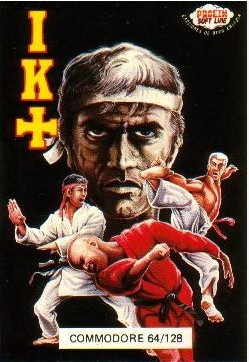
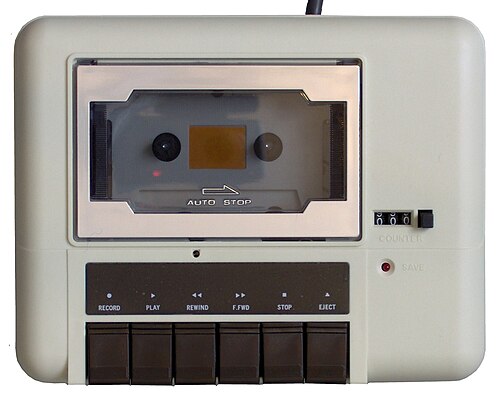
► THE NAME THAT APPEARS ON EVERY LIST
Ask any forty- or fifty-something who owned a Commodore 64 which was the best game on the machine. Some will mention Last Ninja 2, others will bring up Turrican, the hardcore crowd will go for Maniac Mansion... but there is one answer that comes up more than any other: IK+. International Karate Plus. Archer MacLean's game that in 1987 made you forget about eating, bathing and everything else that wasn't hammering a joystick in a karate fight against two simultaneous opponents.
But of course, we say that now, in our forties, with nostalgia gilding everything. The question worth asking is: was IK+ really the best C64 game, or was it simply the most loved? Is its gameplay what puts it at the top, or did we play it at the best time of our lives and memory does the rest? Let's try to answer that honestly — that's what we're here for.
IK+ has something very few C64 games managed: it's still fun today. Not as a historical document, not as a retro curiosity. Genuinely fun, with friends in front of an emulator in 2026. That isn't nostalgia. That is design.
► ARCHER MACLEAN: THE GENIUS WHO CODED ALONE
To understand IK+ you need to understand its creator. Archer MacLean was a British programmer who in 1986 released International Karate for the C64 — already a notable game — and then locked himself away, almost entirely alone, to improve it until it became something different. Not a sequel. An evolution. He added the third simultaneous fighter, redesigned the backgrounds, perfected the physics, and handed the music to someone who needed no introduction either.
MacLean was one of those 1980s programmers who did absolutely everything: the code, the game logic, the graphics, the artistic direction. Today that's called indie developer and carries glamour. In 1987 it was called "that bloke who spends all year locked away with his C64" and people gave him funny looks at parties. But the results spoke for themselves.
► ROB HUBBARD AND THE MUSIC THAT NEVER LEAVES YOU
If there's one thing where IK+ is objectively the best — beyond debate, without nostalgia, without nuance — it's the soundtrack. Rob Hubbard composed for this game one of the most celebrated pieces in the entire history of the SID chip, and that is not hyperbole. It's a composition that opens with an oriental melody that hooks you in the first four bars and never lets go. It has layers, it has rhythm, it has an energy that fits perfectly with what you're doing on screen.
IK+'s SID music is the kind that stayed in your head after you turned the computer off. The next day, at school, you'd find yourself humming it without meaning to. And thirty-odd years later, the moment you hear it again, something in the brain goes click and you're back in your room, joystick in hand, the whole afternoon ahead of you. If you want to know what the SID chip sounds like at its finest, hit play above and listen.
► SCREENSHOT GALLERY
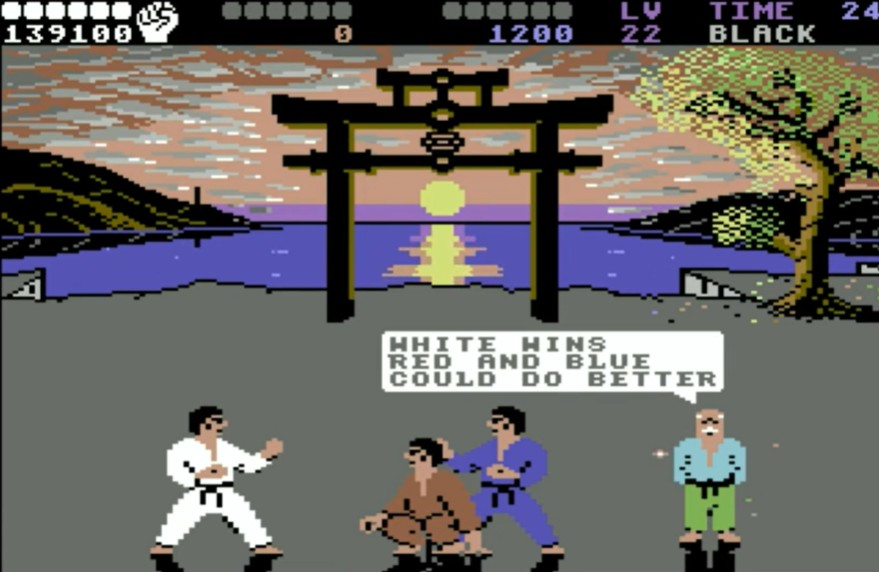
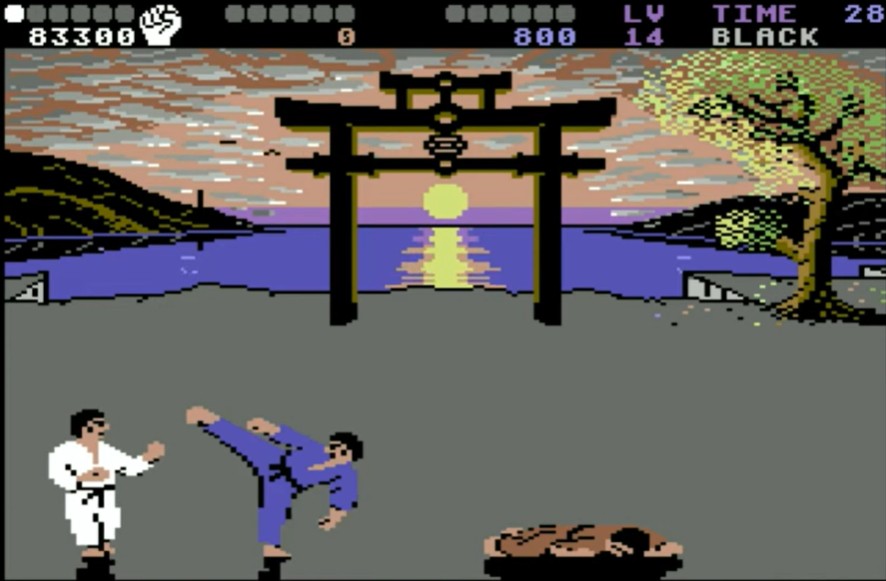

📷 That background with the torii and the lake at sunset. In 1987. On a C64. Take a moment.
► GAMEPLAY: THREE KARATEKA AND ONE JOYSTICK
The great leap IK+ made over its predecessor — and over almost everything else on the market in 1987 — was adding a third fighter to the screen. Two against one, all simultaneous, in real time. That sounds simple when you say it, but it completely changed the game's dynamic. It was no longer a clean one-on-one duel. It was controlled chaos where at any moment you could take a kick in the back while exchanging blows with the one in front.
The control in IK+ for C64 is what game designers call "easy to learn, hard to master". With a single-button joystick you can throw basic hits from the first minute. But the advanced moves — flying kicks, sweeps, blocks timed to the exact moment — require time, practice and a coordination that back in the day took weeks of dedication. The control system responds with a precision that Cobra, for example, never had even in its wildest dreams.
Objectively speaking, IK+ is not the most technically ambitious C64 game. Turrican has more visual richness. Last Ninja 2 has more depth. Maniac Mansion has more narrative. But IK+ does something none of them manage with the same effectiveness: it is immediately fun, has a perfect learning curve, works equally well alone or with friends, and in 1987 there was nothing like it on any home platform. "Best C64 game" is a subjective label, but if a straight answer were required... IK+ has more than enough arguments to take it.
► GRAPHICS: THE TORII THAT CHANGED EVERYTHING
There is a specific moment in the history of C64 gaming that for many was a before and after: the first time you booted IK+ and saw that background. The Japanese torii, the lake beyond, the sunset light reflecting on the water, the tree on the right. In 1987, on a machine with 64 kilobytes of RAM. Those who lived it had it burned into their memory for life.
IK+'s graphics are elegant rather than spectacular. MacLean didn't try to cram two hundred things onto the screen. He went minimalist: a beautiful, detailed background, well-animated fighters with fluid movement, and that visual coherence that makes everything click. The fighters move with a physics that still feels believable today. The hits have weight. The falls to the ground have comic grace. And when all three karateka roll across the floor together after an explosion of blows, the screen has a life of its own.
► IK+ ON OTHER PLATFORMS: WHERE DOES IT SHINE?
Here we have to be honest about something that is sometimes overlooked: IK+ on the Amiga and Atari ST has more colours, more resolution and more graphical richness than on the C64. The 16-bit version is objectively better-looking. But — and this is an important but — Rob Hubbard's music is irreplaceable. The Amiga version has technically higher-quality samples, but loses something of the character that the SID chip gives to the original composition. The SID has a personality that Amiga samples simply don't replicate.
And the most curious thing: many who owned an Amiga at the time remember IK+ as "the C64 game". The C64 version is the canonical one, the one that lodged itself in the collective memory. Probably because it was the first, the most played, and the one that came with that music permanently stuck in your head.
► THE BALL BONUS: THE MINIGAME NOBODY EXPECTED
Between rounds, IK+ has bonus screens that today look like a joke — in the best possible sense. One of them involves dodging a bouncing ball while the fighters try to avoid being hit. It's absurd, it has nothing to do with karate, and it's completely addictive. MacLean apparently added it because he found it funny and had space in the game. That is the 1980s designer mindset: if it works and makes you smile, it goes in.
That detail says a lot about the spirit of IK+. It isn't a solemn game that takes itself too seriously. It has a sense of humour, it has personality, it has those small moments that make the experience more than the sum of its parts.
The definitive proof that IK+ isn't just nostalgia: load it today in an emulator with two friends who have never seen it. Within five minutes they'll be laughing, trash-talking each other and asking for another round. That, with nearly forty years behind it, is not something every game can pull off.
► IS IT WORTH IT TODAY? THE SHORT ANSWER: YES
IK+ is one of those extremely rare cases where the reputation does not lie. It's not the most technically impressive C64 game, nor the deepest, nor the longest. But it has something very few games from any era have: it is fun in a pure, immediate, no-frills way. It boots up, you understand what to do, and within two minutes you're hooked.
If you played it back in the day, loading it in VICE today will produce exactly the effect you expect: that mixture of instant recognition, music that yanks you straight back to 1987, and the surprise of discovering it still works just as well. And if you've never played it — if you came to the C64 through borrowed nostalgia — IK+ is the first game you should try. Not to understand the history. To understand why people love this machine so much.
IK+ doesn't need nostalgia to work overtime on its behalf. It's a brilliant game that in 1987 had no rival on any home platform and that in 2026 is still genuinely fun. Archer MacLean designed perfect gameplay for a one-button joystick, Rob Hubbard composed one of the greatest SID soundtracks in history, and the result is one of those games that defines a machine. The best C64 game? It has the strongest arguments. And if it isn't, it's so close that the difference doesn't matter.
THE BEST
+ Perfect gameplay with a one-button joystick+ Three simultaneous fighters in 1987
+ Rob Hubbard's immortal music
+ Stunning, elegant graphic backgrounds
+ Still genuinely fun today, in 2026
+ Multiplayer mode that destroys friendships
THE WORST
- Short on content compared to modern games- Enemy AI looks limited today
- 16-bit versions have better graphics
- Can become repetitive in single player