IMPOSSIBLE MISSION
THE VOICE THAT FROZE OUR BLOOD AT EIGHT YEARS OLD
► THE PHRASE NONE OF US QUITE UNDERSTOOD
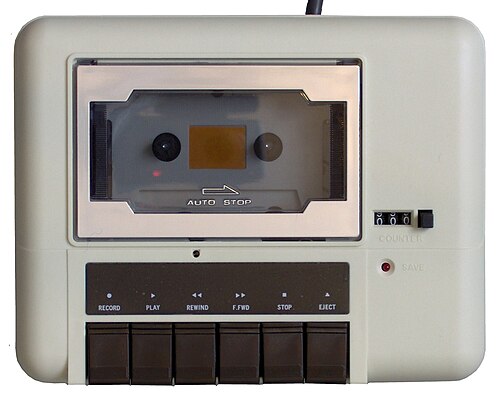
Picture the scene. The year is 1985, or maybe 1986. You're eight or nine years old, perhaps ten. You switch on the C64, load the game after that endless wait from the datasette or the squeal of the disk drive, and suddenly, without warning, a voice comes out of the television. A real voice. Synthesised, yes, with that cold-robot quality that defined the 1980s, but a human voice coming out of a 64-kilobyte computer.
"Another visitor. Stay awhile... Staaaay Foreverrrr."
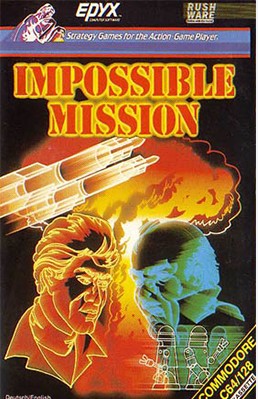
If you were eight years old and your hair didn't stand on end, either you were very busy with your snack, or you were a child of superhuman bravery. Because in 1984, having a video game talk to you was, literally, science fiction made domestic reality. There was no tutorial, no introductory text, nothing. Just that silver-haired man pointing at you and making it perfectly clear that if you entered his fortress, you weren't coming back out.
And the phrase, of course. The phrase everyone remembers. The problem — or the charm, depending on how you look at it — is that none of us quite understood it at eight years old. You knew it was threatening. You knew the white-haired fellow didn't wish you well. But the poetic nuance of "stay forever" as an elegant synonym for "you're going to die here" was too sophisticated for a primary school child whose English class had reached, at best, the verb "to be" and asking where the post office was. Hit play above. Forty years later and it still raises goosebumps.
Impossible Mission has the honour of being probably the first home computer game to use digitised voice dramatically to introduce its villain. Before FMV, before voice actors, before all of that: a bloke on a C64 threatening you through the living-room telly speakers.
► ELVIN ATOMBENDER: THE FIRST VILLAIN TO LOOK US IN THE EYE
Impossible Mission arrived from Epyx in 1984, developed by Dennis Caswell, and was one of those games that left you open-mouthed before the expression "leaves you open-mouthed" existed. The premise was simple on paper: you are a secret agent — the classic suited spy, very budget James Bond — and you must infiltrate the underground fortress of Doctor Elvin Atombender, a mad genius on the verge of launching an attack against the free world. We're talking Cold War plot distilled into eight bits.
Atombender wasn't just a name on a scoreboard. He was a character with presence, with digital charisma of the unforgettable kind. He appeared to threaten you, to laugh at you, to remind you that you were in his house. And that, in 1984, when video game villains were basically an angry sprite or a flashing text prompt, was absolutely revolutionary.
► DENNIS CASWELL AND THE 64KB THAT CHANGED EVERYTHING
To understand Impossible Mission you need to understand the context. In 1984, squeezing digitised voice into a home computer game was an engineering feat that very few people thought possible. Dennis Caswell exploited the C64's SID chip in a way almost nobody had explored: not for music, but for speech synthesis. The result was what it was — a robot with a cold, as we've said — but the emotional impact was real and measurable in the form of stunned kids in front of their televisions.
The protagonist agent's animation was also, in 1984, the most fluid thing seen in a home video game without question. The character rolled across the floor, did forward somersaults, fell off platforms with realistic physics. There was weight, there was inertia, there was a coherence of movement that in those days felt almost magical.
► SCREENSHOT GALLERY
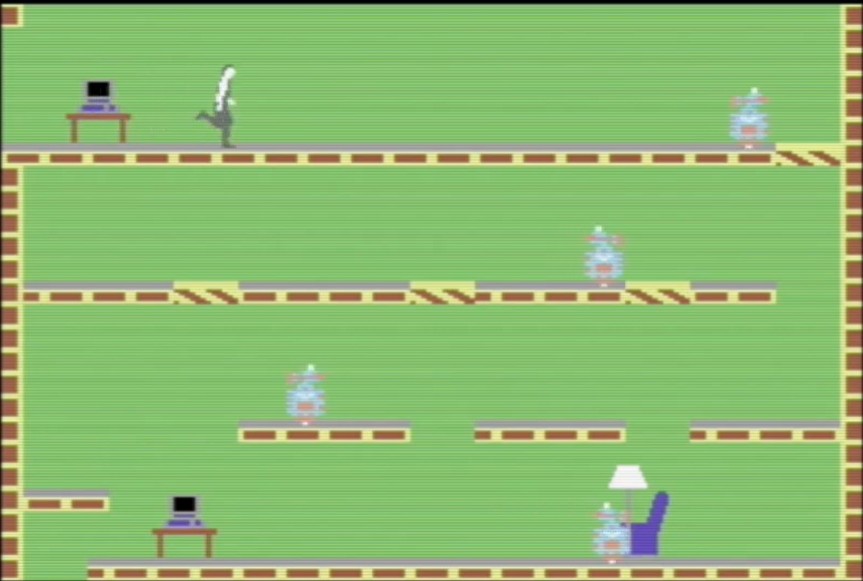
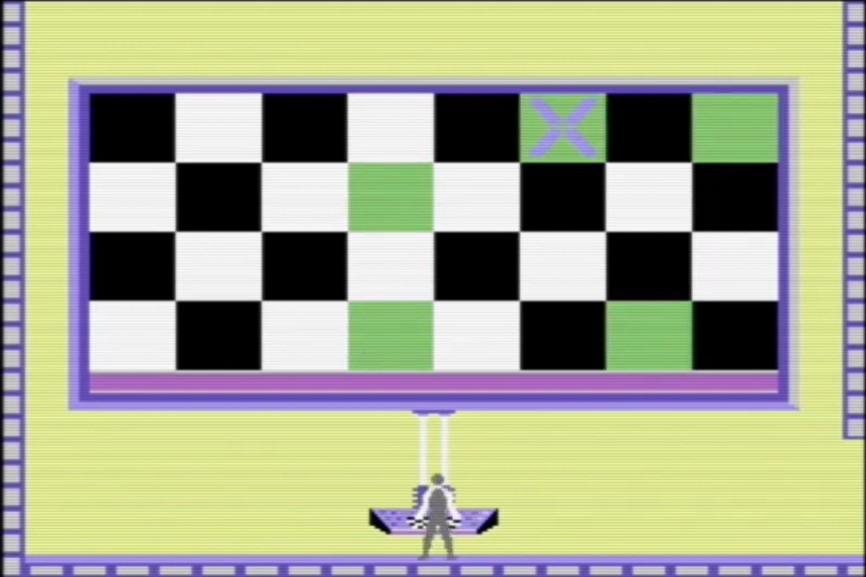
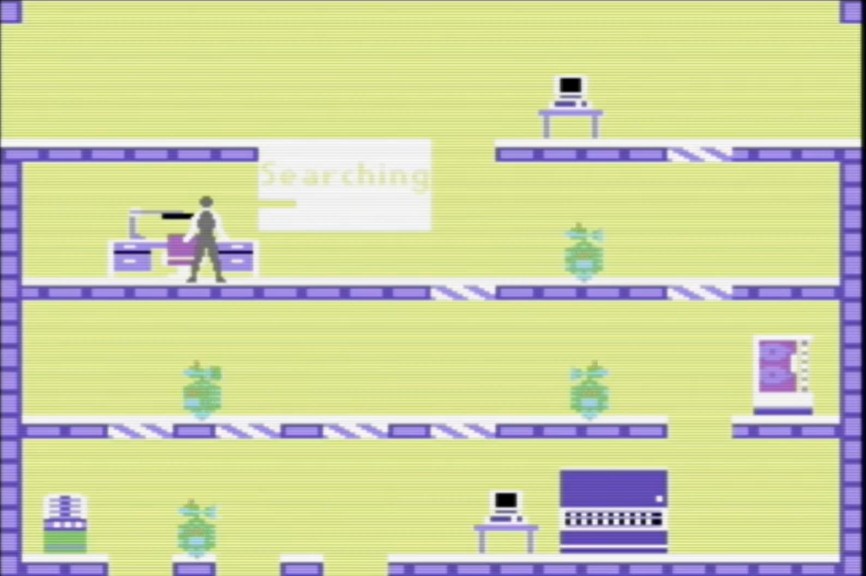
📷 Those rooms and those robots. In 1984. With 64 kilobytes. Take a moment.
► GAMEPLAY: BRILLIANT IN THEORY, IMPOSSIBLE IN PRACTICE
The mechanics were brilliant on paper. Atombender's fortress was divided into over thirty rooms connected by lifts. In each room there were patrolling robots — each with their own patterns, some electrocuting the floor, others shooting, all relentless — and terminals to search. The goal was to collect pieces of a puzzle which, reassembled in the correct order, formed the access password to Atombender's headquarters. You had six hours. In real time. Six hours that shrank with every contact with a robot: ten minutes per hit, no mercy.
Sounds good, doesn't it? The problem was that you understood all this by reading the manual. The manual that, on the pirated copy from the market or the one your mate taped for you, didn't come with it. So the typical experience was: you go in, you see the robots, they kill you, you go back, you try the somersault jump, they kill you again, you try to access a terminal, text in English appears that you don't understand, they kill you a third time, and eventually you put the game away because you have no idea what you're supposed to be doing.
And yet, you kept coming back. Because there was something about that game that hooked you even when you understood nothing.
Most of those who "played" Impossible Mission in the eighties basically did three things: listen to Atombender's phrase, try to leap over a robot with the somersault, and stare at terminals without understanding anything. Actually completing the game was something nobody in the playground had done. Or knew anyone who had done it. The ending of Impossible Mission was an urban legend, like the level 256 of Pac-Man.
► THE ANIMATION THAT IN 1984 WAS FROM ANOTHER PLANET
The protagonist agent's animation deserves its own paragraph. In 1984 it was the most fluid thing seen in a home video game, without argument. The character moved with a physics that still holds up today: he rolled, he somersaulted, he fell off platforms in a coherent way. Caswell had achieved something very few managed in the eighties: making the character seem real, not a pixel doll making mechanical hops.
The somersault jump — holding the joystick diagonally and pressing the button at the exact moment to fly over a robot — was one of those moves that, when it came off, made you feel like the best player in the world. And when it didn't — which was most of the time — you swore in every language you knew, including the English you didn't understand from the intro.
► A DIFFICULTY THAT BORDERED ON SADISTIC
Let's be honest: Impossible Mission was brutally hard. Not hard-but-fair hard. It was difficult with that streak of old-school cruelty designed to make children suffer. The robots were relentless. The clock ticked down without pity. The puzzle pieces were distributed randomly across each game, ruling out the possibility of memorising a fixed route. And on top of that, if a robot touched you, you didn't just lose a life: you lost ten minutes from the counter, generating a constant and perfectly calibrated sense of dread.
Paradoxically, that difficulty was part of the appeal. Impossible Mission didn't treat you like an idiot. It put a complex problem in front of you and left you to solve it — or not — without condescension. At a time when most action games were either trivially easy or unfairly impossible, this had a quality of respect for the player that you could feel. The game assumed you were intelligent. Perhaps too intelligent if you were eight years old and didn't have the manual.
Years later, thanks to the internet, you found out the game had a real ending. And a small part of you felt that your childhood had been a swindle. The other part — the bigger one — was glad the legend was real.
► IS IT WORTH IT TODAY? THE HONEST ANSWER
Impossible Mission is one of those games you have to split into two categories: what it was at the time and what it is today. In 1984 it was an absolute milestone: the digitised voice, the character animation, the gameplay depth, the fortress design with its dozens of rooms. All of that was from another world on a home computer of the era.
Today, loading it in VICE will produce exactly the effect you expect: Atombender's voice, the instant recognition, that mixture of nostalgia and respect for what it represented. As pure gameplay, the difficulty can be frustrating. But as a historical experience and as a piece of C64 culture, Impossible Mission is essential. Not to understand the history of video games. To understand why that machine marked us for life.
Impossible Mission doesn't need nostalgia to work overtime on its behalf. In 1984 it was a game from another galaxy: digitised voice that raised goosebumps, animation without rival on home computers, and a gameplay depth that very few titles of the era dared to attempt. Did the fact it was so hard mean most of us didn't even know what we were supposed to do? True. Did many of us basically load it to hear the phrase, try the somersault over a robot, and stare at terminals without understanding anything? Guilty. But Impossible Mission left a mark. And games that leave a mark — even when you never reach the end — deserve to be called classics. Atombender promised we'd stay forever. Forty years later, here we still are.
THE BEST
+ Digitised voice that made history in 1984+ Revolutionary protagonist animation for the era
+ Design with dozens of unique rooms
+ Deep and intelligent puzzle mechanics
+ Elvin Atombender: the most charismatic C64 villain
+ High replayability thanks to the randomised puzzle
THE WORST
- Difficulty that borders on sadistic without the manual- Without the manual, you don't know what you're doing
- Robot AI looks limited today
- Can be frustrating in short sessions