LAST NINJA 2
THE NINJA WHO CONQUERED NEW YORK
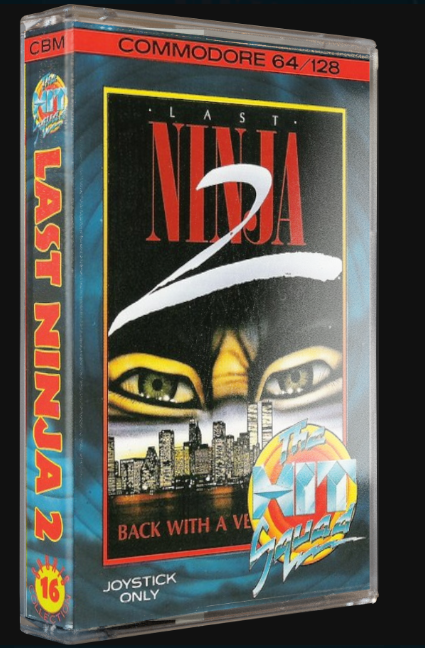
► BACK WITH A VENGEANCE
Some games arrive. And some games devastate. Last Ninja 2 belongs in the second category with such force that, more than thirty-five years on, it still appears on every list of the best Commodore 64 games ever made. System 3 had already left players open-mouthed with the first Last Ninja in 1987, but nobody expected the sequel to be even better. Spoiler: it was, and by some distance.
The premise was as simple as it was brilliant: Armakuni, the last ninja, is magically transported from feudal Japan to... 1988 New York City. Central Park, a mansion, the sewers, the city rooftops. The contrast between ninja philosophy and urban asphalt gave the game a unique personality that no other title of the era had. Because there were already ninjas in video games. But ninjas in New York, facing low-grade thugs in a public park while the SID played one of the most remembered melodies in all of C64 history... that was another league entirely.
The original game cover showed an eerie pair of ninja eyes with the New York skyline behind them — including the Twin Towers. Today it is an involuntary historical document that adds a bittersweet layer of nostalgia every time the original box is seen.
► SYSTEM 3 AND THE ART OF DOING THINGS RIGHT
System 3 was a British company with great craft and little fanfare. They didn't have Ocean's size or EA's budget, but when they set out to make a game they did it with an ambition disproportionate to their size. The first Last Ninja had been a technical and artistic marvel on the C64; the sequel took that foundation and pushed it to the limit. More animations, more variety of environments, better music, and a sense of an inhabited world that was hard to find in an 8-bit computer in 1988.
The core team that developed the game included John Twiddy as lead programmer, with Hugh Riley and Mark Cale supervising production. But if one name shines above all others in Last Ninja 2, it is that of Matt Gray, the composer who turned the SID chip's limitations into something that has no other name but art.
► GAMEPLAY: NINJA IN THE CONCRETE JUNGLE
Last Ninja 2 was an action-adventure game in isometric perspective divided into six levels: Central Park, the city streets, the sewers, inside a building, the rooftops and the villain Shogun Kunitoki's final lair. Each level was its own world with its colour palette, its distinctive enemies and its object puzzles that made you think before throwing kicks.
Last Ninja 2 was not just a beat-'em-up with pretensions. The inventory system and object interaction gave it an adventure dimension that set it apart from the typical button-mashers of the era. You had to find objects, combine them, use them in the right place and at the right moment. If you spent your time hitting everything that moved without exploring the environment, you got stuck. The game demanded patience and observation — qualities not always associated with an action game in 1988.
The combat was another matter entirely. The joystick fighting system was demanding — diagonals, movement combinations, timing — and dying was easy. But unlike other games where the difficulty felt unfair, here the sensation was that you could improve. Every death taught something. And when you finally took down that sewer thug who had been making your life impossible for half an hour, the satisfaction was enormous.
► GRAPHICS: PERFECT ISOMETRY
Talking about Last Ninja 2's graphics on the C64 means talking about one of the finest visual achievements ever realised on the machine. The isometric perspective was implemented with a precision and detail that embarrassed many contemporary games on technically superior platforms. The environments had genuine depth, the sprites were animated with fluidity and each level had a perfectly differentiated visual identity of its own.
Central Park was green and alive, with leafy trees and stone paths. The sewers were dark and claustrophobic. Manhattan's rooftops were grey and urban, with that sense of void when you looked to the sides. All of this on a C64 with 64 kilobytes of RAM and a 1 MHz processor. Someone please explain it, because there are no words.
► SOUND: MATT GRAY AND THE GREATEST SID MELODIES
If Last Ninja 2's graphics were extraordinary, the soundtrack enters the SID chip's hall of fame outright. Matt Gray composed for this game some of the most remembered, imitated and revered melodies in the entire history of the Commodore 64. The music of Central Park — that first level, that first listen — is one of those experiences burned permanently into the auditory memory of anyone who heard it as a child.
Gray pushed the SID to unsuspected limits. The melodies of Last Ninja 2 have a harmonic richness, a structure and an emotiveness that in 1988 made professional musicians raise an eyebrow. They didn't sound like 8-bit video game music: they sounded like music. The Central Park piece you can hear above has been circulating in remixes, covers and tributes for decades. If you're hearing it for the first time, prepare to understand why people have talked about it for so long.
Matt Gray would later collaborate with Jeroen Tel and other SID composers on musical preservation projects. The music of Last Ninja 2 has been performed live at retro events around the world, including the famous "Back in Time" series in the UK.
► SCREENSHOT GALLERY
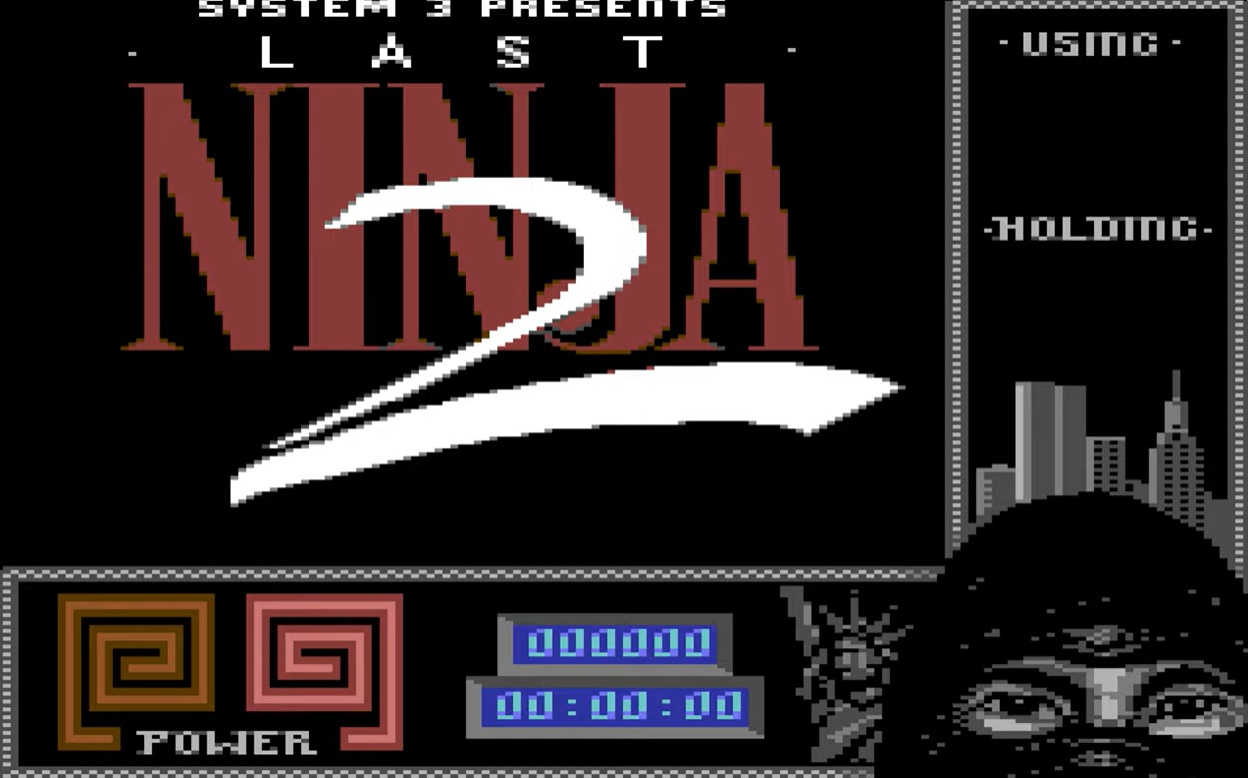
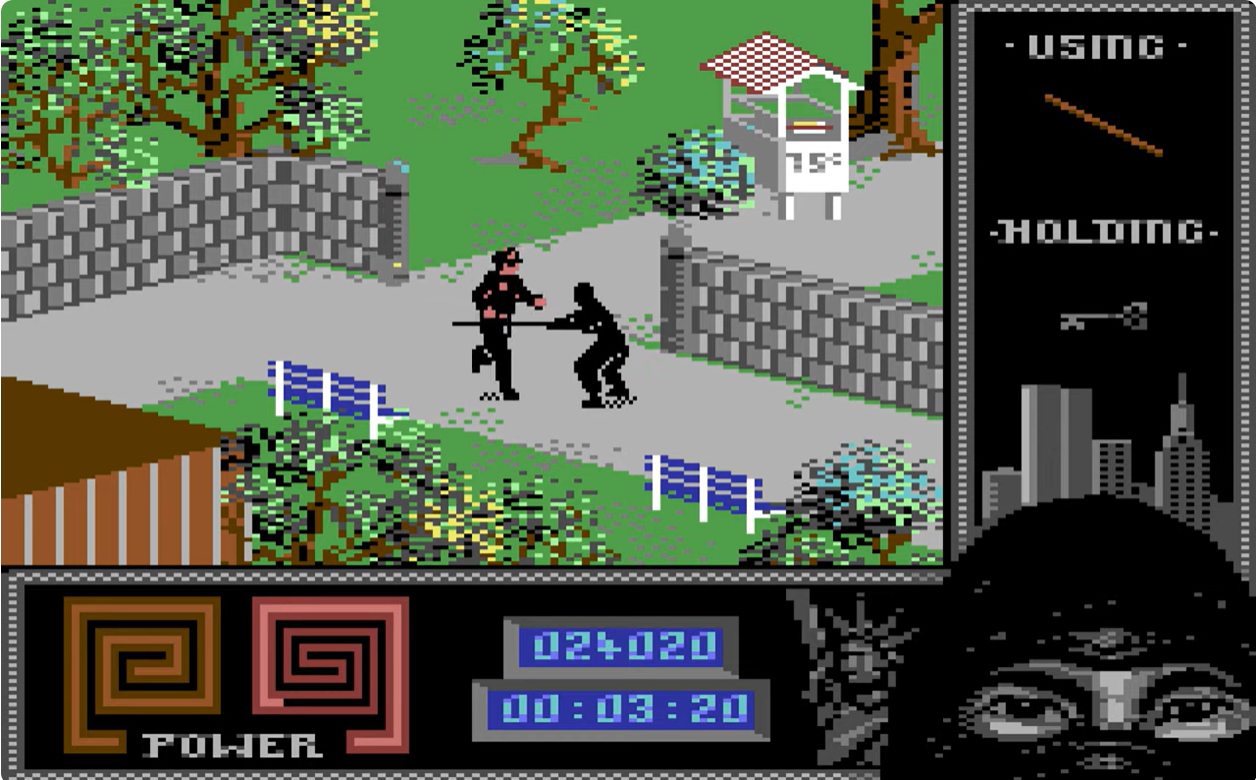
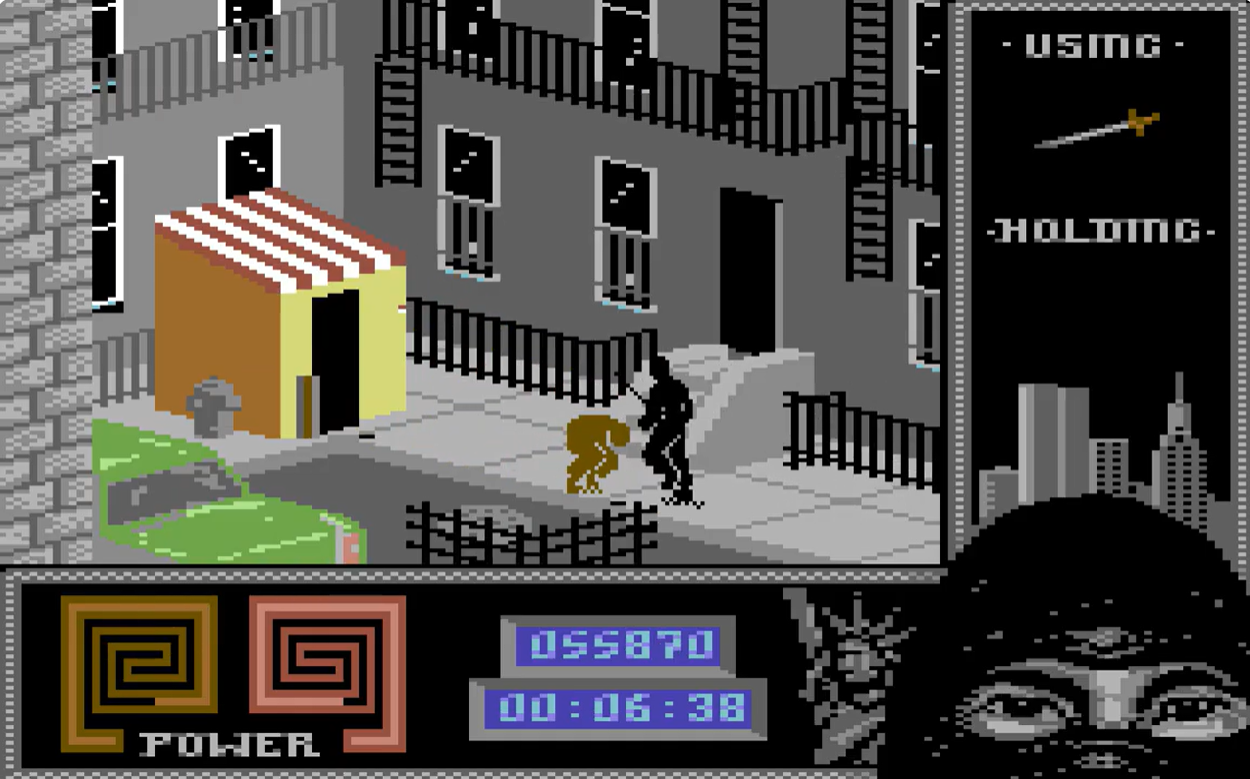
📷 See more screenshots at Lemon64 and MobyGames (links below)
► THE LEGACY: A TRILOGY THAT DEFINED AN ERA
Last Ninja 2 was the peak of the saga on the C64. The third game — Last Ninja 3, from 1991 — arrived in the twilight of the Commodore, with the market looking towards the Amiga and the PC, and although it was technically competent it never achieved the emotional impact of the second instalment. In a sense, Last Ninja 2 was the most beautiful swan song the platform could have had: a game that arrived when the C64 had already been on the market for six years and still managed to astonish everyone.
The influence of Last Ninja 2 on European video game culture in the late 1980s is difficult to overstate. Its combination of action, adventure, aesthetics and soundtrack defined a standard that many other studios attempted to reach without success. And on the C64, that standard was never surpassed.
Last Ninja 2 is not just one of the best Commodore 64 games. It is one of the best games of the 1980s, full stop. A title that managed to be, simultaneously, a first-class technical, artistic and musical achievement. If you have to choose one game to show someone what the C64 was capable of, this is the candidate. Thirty-five years on, it still moves you.
THE BEST
+ Matt Gray's soundtrack: historic+ Extraordinary isometric graphics
+ Combination of action and adventure
+ Unique and original urban setting
+ Six very different levels
+ The best C64 game for many
THE WORST
- Isometric controls hard to master- Object puzzles sometimes obscure
- No checkpoints: must start over
- Versions on other platforms inferior
- Over too soon